
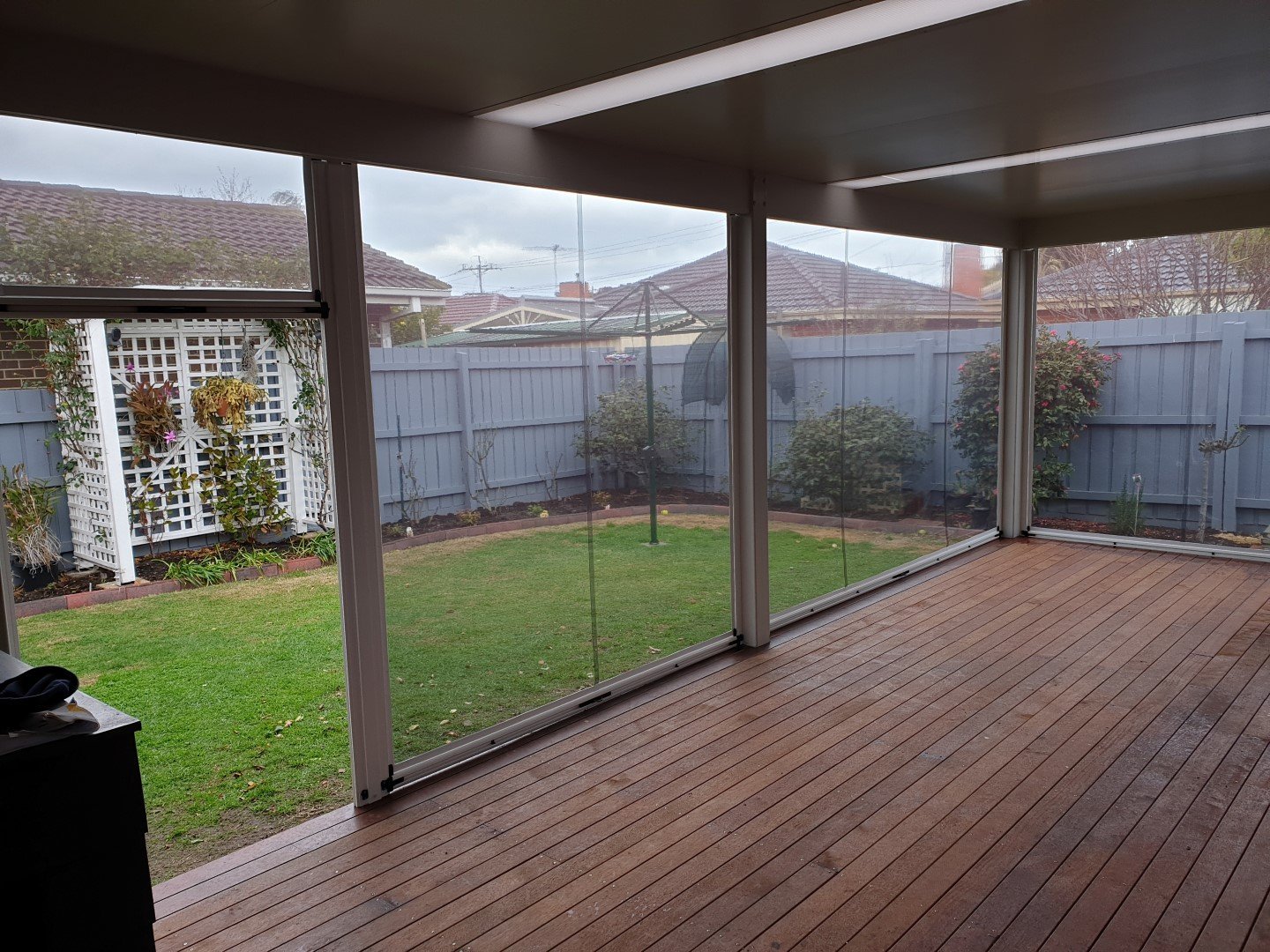
Yes, you can often install Ziptrak blinds on an existing pergola, provided the structure has suitable mounting points, adequate clearances, and a frame that can safely support the installation. For Melbourne homeowners, the first step is not choosing a fabric colour. It is checking whether the existing posts and beams are suitable for the proposed blind system.
If you want to enclose an outdoor entertaining area without automatically rebuilding the pergola, a professional assessment can help establish what is possible. The installer needs to consider the frame material, opening dimensions, alignment, fixing surfaces, and exposure to wind and weather before recommending a solution. This guide explains what to check before requesting a quote for Ziptrak blinds in Melbourne, which photos to prepare, and when modifications may be needed.
Can you fit Ziptrak blinds to an existing pergola?
In many cases, yes. Ziptrak outdoor blinds can be installed on suitable outdoor structures, but the result depends on the individual site. A pergola with sound posts, appropriate beams and accessible fixing surfaces may be suitable for a retrofit. However, a structure with deteriorated timber, movement, inadequate fixing faces, or awkward clearances may need further work.
The key distinction is between whether a blind can physically be attached and whether the existing structure is suitable for the loads and forces associated with the installation. Therefore, a site assessment should address both questions.
It is also important to understand what you want the blinds to achieve. Clear PVC blinds can help maintain views while reducing exposure to wind and rain, subject to the system and site conditions. On the other hand, mesh can provide shade and glare control while allowing more airflow. Neither option makes an open-roof pergola completely weatherproof.
What an installer should check before fitting pergola blinds
Before ordering retractable outdoor blinds, ask the installer to assess the following points at your property.
Frame condition: Check for rot, splitting, corrosion, loose connections, movement or other visible damage around the intended fixing points.
Beam and post suitability: Confirm that the proposed mounting locations provide suitable support for the selected blind system.
Fixing surfaces: Check whether the material, thickness, condition, and available fixing face are appropriate for the specified installation method.
Opening dimensions: Measure the width and height of every opening separately because all sides may not be identical.
Alignment: Check whether posts are plumb, beams are level, and mounting faces are sufficiently aligned for the tracks and blind assembly.
Operating clearance: Allow for tracks, brackets, pelmets, and other components. Also, check doors, windows, handles, and nearby fixtures for possible interference.
Wind and weather exposure: Discuss how exposed the pergola is, which sides receive prevailing weather, and how the area will be used.
Roof and drainage: Identify the roof type, drainage paths, and any features that could obstruct mounting or affect water movement.
Electrical access: If considering motorised blinds, establish whether suitable power access and a practical cable route are available.
Required modifications: Ask whether additional supports, different fixing arrangements or other work may be necessary before installation.
Although these checks may help identify potential issues early, they do not replace a professional assessment or the manufacturer’s installation requirements. So, do not rely on photographs or rough measurements alone to confirm structural suitability.
Timber, steel and masonry: mounting considerations
The correct installation approach depends on the actual material and the condition of the mounting surface. Different materials require different fixing methods, so the installer should confirm the appropriate hardware and fixing details for the specific system.
| Structure | What to inspect | Possible consideration |
| Timber pergola | Rot, splitting, cracks, loose joints, and timber condition around fixing points. | Sound timber and suitable fixing locations are essential. Deteriorated sections may require repair or an alternative mounting arrangement. |
| Steel pergola | Corrosion, coating condition, member dimensions, connections and accessible fixing faces. | Select fixings for the actual steel section and confirm the mounting arrangement. |
| Masonry or brickwork | Cracking, mortar condition, masonry type and suitable fixing-point locations. | The fixing method must suit the substrate. Decorative brickwork should not automatically be assumed to be a suitable structural fixing surface. |
| Aluminium structure | Section size, wall thickness where relevant, connections and manufacturer restrictions. | A hollow or lightweight section may require a specifically designed mounting solution. |
Timber, steel, brick, aluminium and concrete are some of the common mounting surfaces. However, the availability of a mounting method does not mean that every existing structure made from those materials is automatically suitable in your case.
Measurements, clearances and alignment
Measure each opening individually
Record the approximate width and height of each opening, noting whether the dimensions vary between the top, middle and bottom. Irregular openings should be identified rather than averaged without guidance. The installer should confirm the final dimensions before the blinds are manufactured.
Check the fixing faces and available space
Tracks need suitable mounting surfaces, and the top assembly requires adequate room in the intended position. Existing gutters, roof members, decorative trim, lights, downpipes, and door hardware may affect the layout. So, the installer should check the actual product dimensions and required clearances rather than assume that a visually spacious opening will accommodate every component.
Look for alignment problems
Posts that lean or beams that are not level can complicate installation and operation. An assessment should establish whether the structure can accommodate the required alignment and whether corrective work is necessary. Also, do not attempt to force tracks into position to compensate for a structural problem.
Will your pergola need reinforcement or modifications?
Not every retrofit requires reinforcement. If the existing frame is in suitable condition and has appropriate mounting points, installation may be straightforward. If the structure is damaged, unstable or unable to accommodate the specified fixings, the installer may recommend repairs, additional support or a different arrangement.
Potential complications include decayed timber, corroded steel, loose post connections, limited fixing surfaces, unusually wide openings and obstructions around the top or sides. These are reasons to investigate further, not proof that the pergola must be rebuilt.
For significant structural concerns, seek advice from an appropriately qualified building professional or engineer. Confirm whether building approval or other permissions are required for any proposed building work. Requirements depend on the circumstances and should not be inferred solely from the fact that outdoor blinds are being added.
If your proposed work involves changes to the pergola structure, check the Victorian building-permit guidance or ask an appropriately qualified building professional whether approval is required for your particular circumstances.
Also, when comparing quotes, ask the installer to separate the proposed blind system, installation work, and any recommended structural modifications. That makes it easier to compare like with like and understand what is included. Ultimately, the proposed work and existing structure determine which requirements apply.
Clear PVC blinds or mesh: which suits your pergola?
Once the mounting arrangement is considered suitable, choose a fabric based on how you use the space and the conditions it faces.
| Option | Best suited to | Considerations |
| Clear PVC blinds | Maintaining outward views while helping reduce exposure to wind and rain. | Discuss ventilation, condensation, heat build-up, cleaning, and the system’s operating guidance. |
| Sunscreen mesh | Reducing glare and providing shade while allowing airflow. | Mesh openness and fabric selection affect visibility, shade, and weather protection. |
| Alternative patio shades | Situations where a different enclosure or shading approach better suits the structure. | Compare intended use, fixing requirements, and limitations before choosing. |
Ziptrak Outdoor Blinds are one option for enclosing suitable openings. So, if you are researching outdoor PVC blinds Melbourne, clear PVC blinds, or broader retractable outdoor blinds, ask the installer to explain how each option will perform in your specific location.
What photos should you prepare before requesting a quote?
Clear photographs help an installer understand the layout before visiting, although they cannot establish structural suitability on their own.
So prepare:
- A wide photo of the entire pergola from outside.
- One photo of each opening you want to enclose.
- Close-ups of the top beam, posts, and intended fixing surfaces.
- Photos of visible cracks, rot, corrosion, loose connections, or previous repairs.
- A view of the roof edge, gutters, downpipes, and any nearby doors or lights.
- Approximate opening width and height, plus notes on any uneven dimensions.
- Photos showing nearby power points if you are considering motorised blinds.
Also tell the installer what the pergola is made from, approximately how old it is if known, whether it is attached to the house, and which sides receive the most wind or afternoon sun.
Frequently asked questions
Yes, Ziptrak blinds can be installed on suitable existing structures. Coolabah Shades offers custom outdoor blind solutions, with the mounting arrangement and suitability depending on the pergola’s condition, fixing points and available space.
Yes, Coolabah Shades offers clear PVC and shade mesh options. Clear PVC helps maintain outdoor views while reducing exposure to wind and rain, while shade mesh provides shade and airflow. The right option depends on how you use your pergola.
Potentially. The correct mounting method depends on the material, its condition, and the available fixing points. A site assessment is needed to determine suitability.
No. Some pergolas have unsuitable fixing surfaces, inadequate clearances, or structural issues that need to be addressed. Others may be suitable with an appropriate mounting arrangement.
Not necessarily. Reinforcement depends on the condition and configuration of the existing frame and the requirements of the proposed installation. Always ask the installer to explain any recommended modifications.
DIY suitability depends on the product and installation requirements because accurate measurement, mounting, and alignment are important. So, it’s better to seek the manufacturer’s instructions and professional advice before attempting installation.
Clear PVC is worth considering when you want to maintain views and reduce exposure to wind and rain. Mesh is worth considering when airflow, shade, and glare reduction are priorities. The best choice depends on the site and intended use.
Arrange an assessment for your existing pergola
You may not need to replace your existing pergola to improve your outdoor living space. The sensible first step is to establish whether the frame, fixing points, clearances and exposure suit the blinds you have in mind.
Coolabah Shades offers a wide range of patio shades, awnings and other outdoor shading solutions, and also provides custom outdoor blinds and offers a free, no-obligation measure and quote.
So, If you’re considering Ziptrak blinds for your existing pergola in Melbourne, contact Coolabah Shades to discuss your space, share photos and arrange a free, no-obligation measure and quote. An assessment can help clarify the available options and whether any additional work should be considered.